
Commemorating 75 years of India's independence, SBI has launched a 75-day Utsav Deposit Scheme, offering 6.10 per cent for fixed deposits. Senior citizens will get an additional 0.50 per cent and the offer is on until October 30, SBI said.
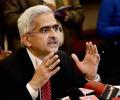
Reserve Bank Governor Shaktikanta Das on Monday said despite the latest headwinds arising from the Jackson Hole summit leading to extreme volatility, our banking system and financial markets are strong enough to withstand such pressures. Taking the markets by surprise, US Fed chair Jerome Powell had told the annual Jackson Hole summit of central bankers and economists last week that he would have to keep raising federal fund rates to tame inflation, which remains the biggest challenge to the world's largest economy. He also warned of the pains that such monetary policy actions would create on growth and jobs.

Manufacturing activities in India fell to a five-month low in September as new orders rose at a softer pace, which tempered production growth, a monthly survey said on Tuesday. The seasonally adjusted S&P Global India Manufacturing Purchasing Managers' Index (PMI) fell to 57.5 in September, down from 58.6 in August -- the lowest in five months. The September PMI data pointed to an improvement in overall operating conditions for the 27th straight month.

Global fund managers remain bullish on the Japanese stock markets, which is now their most preferred destination in the Asian region. Both Morgan Stanley and Jefferies in their recent reports, have cited their preference for the Land Of The Rising Sun, which is fast becoming the land of the rising equities, too.

'If the borrower can't repay the loan due to lack of income or losses from speculative activities, they risk defaulting on it.' 'This could lead to the bank seizing the property.'

As many as 80-85 per cent Paytm wallet users will not face any disruption because of regulatory actions, and the remaining users have been advised to link their apps to other banks, RBI Governor Shaktikanta Das said on Wednesday. The Reserve Bank of India on January 31 barred Paytm Payments Bank Ltd (PPBL) from accepting deposits, credit transactions, or top-ups in any customer accounts.
The Reserve Bank of India (RBI) will maintain the policy repo rate at 6.5 per cent during its upcoming June 8 announcement, considering the easing of retail inflation in April and the potential for further decline, indicating the effectiveness of previous policy rate actions, anticipate experts. Headed by Reserve Bank Governor Shaktikanta Das, a meeting of the six-member Monetary Policy Committee (MPC) is scheduled for June 6-8. The decision of the 43rd meeting of the MPC would be announced on Thursday, June 8.

Reserve Bank of India governor D Subbarao on Thursday said that India's central bank needs to control inflationary expectations and support growth.

The inflation target of the RBI would be reviewed once every five years.
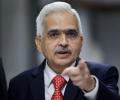
The Reserve Bank of India on Friday decided to keep the policy rate unchanged for fourth time in a row as it maintains a tight vigil on inflation. The rate increase cycle was paused in April after six consecutive rate hikes aggregating to 250 basis points since May 2022. Announcing the bi-monthly monetary policy on Friday, RBI Governor Shaktikanta Das said the Monetary Policy Committee (MPC) unanimously decided to keep the repo rate unchanged at 6.5 per cent.
Fed move based on US economic recovery, which should boost India's exports, narrow CAD and help curb 'imported' inflation

The Reserve Bank of India's (RBI's) job to bring down inflation is not over, and any premature move on the policy front could undermine the success achieved so far on the price situation, according to RBI Governor Shaktikanta Das. RBI's rate setting panel, Monetary Policy Committee (MPC), had met for three days from February 6-8. The panel decided to leave the key policy rate unchanged at 6.5 per cent for the sixth time in row.
New norms to keep Raghuram Rajan out of the race.
Reserve Bank of India governor Bimal Jalan said the country would have no problems in meeting its oil bill in the event of a war in Iraq.

India's current account deficit (CAD) may dip further in the March quarter of FY24 as pressure from the negative net exports during the January-March period eased to an 11-quarter high. A part of the gross domestic product (GDP) data, net export- which is usually negative for India - captures the difference between exports and imports of both goods and services, while the CAD data, released by the Reserve Bank of India (RBI), also factors in private transfer receipts.
The Reserve Bank of India is likely to formulate guidelines on outsourcing banking activities by July to improve regulatory oversight for risk management of this segment.
Bankers have suggested that the Reserve Bank of India lower the statutory liquidity ratio and the cash reserve ratio as the present liquidity crunch is affecting their business. During the mid-term resource management discussion with the RBI team led by Deputy Governor Rakesh Mohan, the country's top bankers said the tight liquidity condition was pushing up the cost of funds and putting further pressure on margins.
The Sensex crashed in the last hour of trade and ended down 455 points (or 2.25%) at 19,760. Nifty slumped 138 points at 5,986.

Here are the highlights of the monetary policy announced by RBI governor Shaktikanta Das on Friday.
India is more insulated to Fed-related volatility than other emerging markets due to its better economic fundamentals

For willful defaulters, change in ownership accompanied by punitive action against the defaulting management is the way to go.

India Inc on Wednesday said the Reserve Bank's move to cut interest rate by 0.50 per cent is "pro-growth" and exhorted banks to transmit the lower interest rate to borrowers to revive demand and kick-start the investment cycle.

Many banks' profits will take a hit and a few of them could even end up being in the red because of treasury losses, triggered by a sudden spike in government bond yields in the rising interest rate cycle, notes Tamal Bandyopadhyay.
Not only were Urjit and Rajan outsiders, they also hired laterally, bypassing the existing talent, especially in the field of economics

The Reserve Bank on Wednesday marginally lowered the country's GDP growth projection for the current fiscal at 6.8 per cent from its earlier estimate of 7 per cent. However, despite the downward revision in the economic growth projection, India will remain among the fastest growing major economies in the world, said RBI Governor Shaktikanta Das while announcing the latest bi-monthly monetary policy.

RBI Governor Shaktikanta Das on Friday said the entry of big tech firms into the financial sector poses systemic concerns like overleveraging at the borrowers' ends.

The Congress party has tweeted a 1.44-minute clip from the conversation which will be aired in full at 9 am Tuesday.

'The committee has been constituted. Different government departments and FSDC members are part of it.'
Deputy Governor K C Chakrabarty says monetary policy to ease once inflation comes down.

In the first such collaboration for India, the country's flagship payments platform, the Unified Payments Interface (UPI), and Singapore's PayNow payment system have launched a real-time cross-border payment linkage system. The linkage, which was launched by Prime Minister (PM) Narendra Modi and Singapore's PM Lee Hsien Loong on Tuesday, was kicked off by a live cross-border transaction between Reserve Bank of India Governor Shaktikanta Das and Monetary Authority of Singapore managing director Ravi Menon, using mobile phones.

The Reserve Bank of India on Friday raised the GDP growth projection for the current fiscal to 7 per cent from 6.5 per cent earlier on buoyant domestic demand and higher capacity utilisation in the manufacturing sector. Announcing the bi-monthly monetary policy, RBI Governor Shaktikanta Das, however, flagged protracted geopolitical turmoil and global economic fragmentation as risks to the growth outlook. The RBI kept interest rates unchanged at 6.5 per cent in Friday's monetary policy statement.
While achieving an eight per cent retail inflation rate by January 2015 is well within reach, Reserve Bank of India Governor Raghuram Rajan notes there is a second target, of six per cent by 2016.

With concern on food inflation ebbing with the monsoon progressing well, the Reserve Bank of India (RBI) is warming up to the idea of a change in stance to "neutral" from "withdrawal of accommodation", according to economists. In his speech on Thursday during the annual event of the Federation of Indian Chambers of Commerce and Industry-Indian Banks' Association, RBI Governor Shaktikanta Das said: "The balance between inflation and growth is well-poised."

In the Union Budget for Financial Year 2023-24 (FY24), Finance Minister Nirmala Sitharaman had held forth on the need for better governance and investor protection in the banking sector. She had proposed certain amendments to the Reserve Bank of India Act (RBI Act), 1934; the Banking Regulation Act (BR Act), 1949; and the Banking Companies (Acquisition and Transfer of Undertakings) Act, 1970.

The BJP MP said the guidelines for grant of licences were 'brazenly flouted'.

HDFC Bank on Tuesday said the Reserve Bank of India (RBI) has appointed an external IT firm for carrying out a special audit of its IT infrastructure in the aftermath of repeated service outages at the country's largest private sector lender over the past two years. "RBI has appointed an external professional IT firm for carrying out a special audit of the entire IT infrastructure of the bank under Section 30 (1-B) of the Banking Regulation Act, 1949..., at the cost of the Bank under Section 30 (1-C) of the Act.

The academic prize is sponsored by the Deutsche Bank Donation Fund and carries an endowment of euro 50,000.
